MISSION

We are here to encourage the development of gifted young singers and to stimulate the growth of New York City's invaluable chamber opera companies. But we will not neglect the Metropolitan Opera either. Get ready for bouquets and brickbats.
Showing posts with label Suchan Kim. Show all posts

Monday, December 5, 2022

CHANNELING THE POET


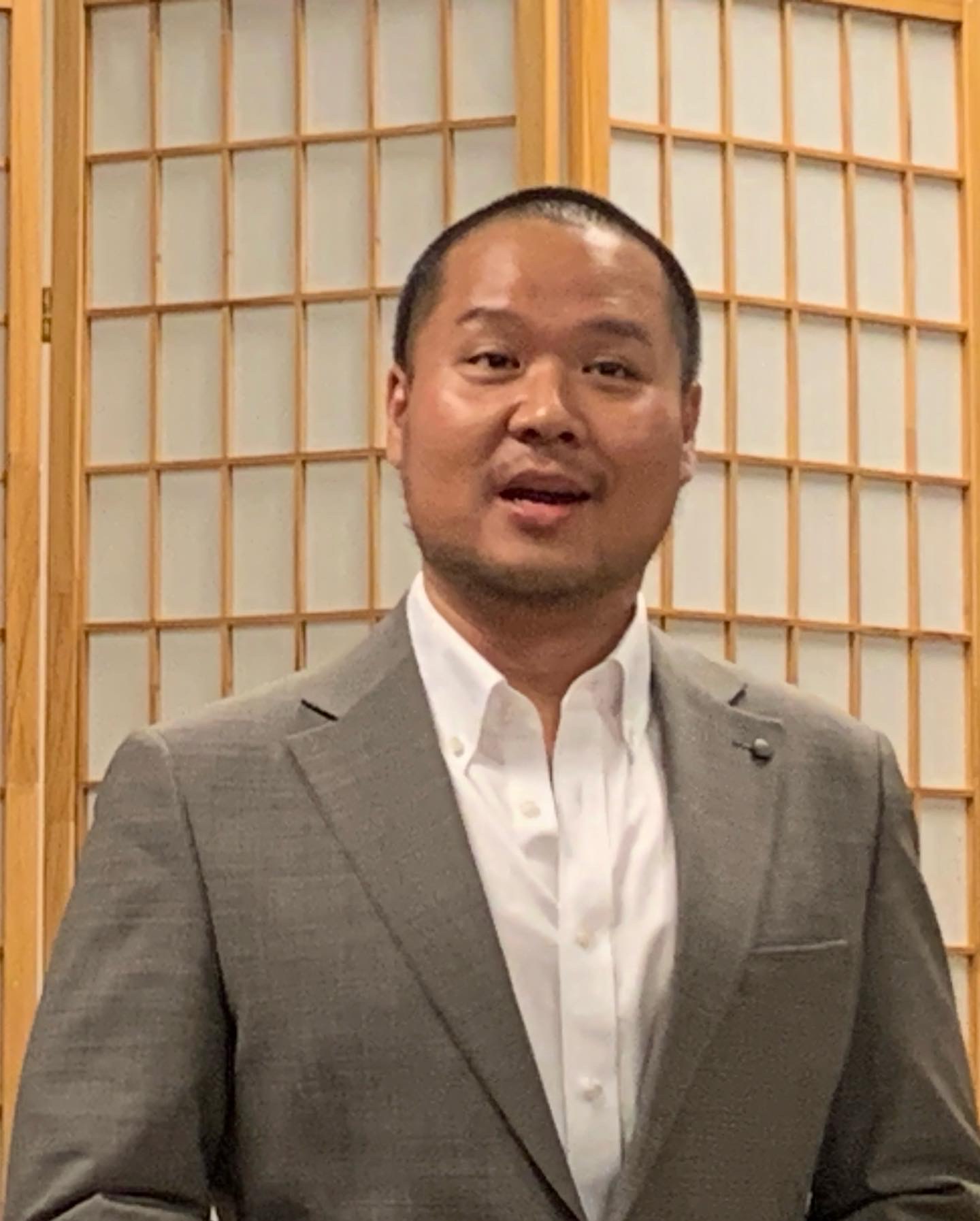
Baritone Suchan Kim

Collaborative Pianist Eric Sedgwick


We hold 19th c. art songs in high esteem and have nothing but bitter scorn for any singer that fails to do them justice. On the other hand, when we hear a singer who shows us something new or something deeper, we want to fall to our knees in gratitude.

Last night at Opera America, we were gifted an evening of song cycles by Naama Zahavi-Ely that left us not only fulfilled but also transported.

Until last night, we had considered Schumann's Dichterliebe in somewhat second place to Schubert's Winterreise and Die Schöne Mullerin.

The performance of the Schumann by baritone Suchan Kim bumped it up to first place. It was so affecting that we needed to go out for a little tearful moment at the conclusion. Heinrich Heine's poetry seemed channeled through Schumann's music and then through Mr. Kim's performance so that we literally felt the many emotions expressed in a soul-to-soul fashion that is rarely achieved in a concert space.

A song cycle is actually a duet for voice and piano in which the piano part sometimes supports the text, sometimes alternates with the text, and sometimes tells us what the text is trying to hide. Collaborative pianist Eric Sedgwick added immeasurably to the effect. The "Dichter" of the title is not telling a story consecutively as is the storyteller in Die Schöne Mullerin. He is rather presenting the many aspects of a love affair gone wrong as in the kaleidoscope of memory;  fragments of emotions return to haunt the disappointed lover. He remembers the joys, the excitement, the betrayals, the resentments, the jealousy, the feigned indifference, the rage, the unwanted dreams of happier times, the attempts to forget, and all other aspects of dealing with grief.

In a performance like this, the listener can get wrapped up in what appears to be spontaneous but is actually the product of hours upon hours of work on the vocal aspects, the phrasing, the breathing, the language, the dynamics, etc. In a great performance the listener can forget all that and feel the emotions. However, due to the unavailability of titles, we couldn't help but notice how perfekt was the German diction. We understood every word. Final consonants were given their due and the terminal "ich" was never slighted.Our companion does not speak German but the storytelling took place in the voice and it was easy to grasp each emotion in its turn.

The power of this performance and its affect on us left us ill-equipped to change gears and focus on the second half of the evening as intently as it deserved. It was a tough act to follow, as they say. Soprano Kinneret Ely (pictured abovehas a bright tone and a most charming manner that lends itself well to the French repertoire. Berlioz' Les nuits d'ete seems more a collection of songs than a unified cycle and indeed we have heard these chansons sung separately more often than together.

The cheerful "Villanelle" and the fragrant "Le spectre de la rose" (the poetry of which inspired Michel Fokine to choreograph a ballet for Diaghilev) made small inroads on our dark mood. The subsequent "Sur les lagunes", "Absence", and "Au cimitière" were sorrowful but the ending "L'île inconnue" lifted our spirits with its playful tone. The cycle is marked by wide leaps and a wide range, a challenge for the singer to keep the voice centered throughout the entire register. In the upper register it is difficult to understand the words, a problem not unique to this artist but rather universal.

Mr. Kim returned to perform another cycle we love--Mahler's Lieder eines fahrenden Gesellen. It shares with the Schumann the Romantic period focus on intense love and the despair of a spurned lover. Much has been written about the wandering keys of the four songs in the cycle and the autobiographical nature of the lyrics written by Mahler himself.

We would like to hear Mr. Kim perform this cycle in the future. It seemed as if he had not worked on it sufficiently. There was nothing wrong with the vocalism but the rare glances at the score of the Schumann were replaced here by frequent glances which broke the emotional connection.

Mr. Sedgwick's playing was consistently magnificent throughout the evening and always supported the singers. We left contented.

© meche kroop

Sunday, October 20, 2019

THE DON DONE IN

Suchan Kim, Maestro Teddy Poll, Brace Negron, Sarah Hayashi, Jesus Murillo, Pavel Suliandziga, and Laura León
(Liana Guberman and Paul An not visible)

We have lost count of the number of times we have seen Mozart's meisterwerk Don Giovanni; this year alone we have seen it at least 4-5 times. We never tire of it; the marriage of Mozart's music and Da Ponte's libretto always makes for a great evening--but only if the singing is superb. Bare Opera assembled a stellar group of singers for their current production and we would expect no less of this exemplary company in their fifth season. There was no one onstage who didn't give their all.

Directors always look for something new to say about the reprobate Don--the pussy grabbing predator who uses his position of power to seduce or overcome women, a sociopathic narcissist who has no awareness of other people's feelings, one who will readily betray those who are dumb enough to fall under his spell. If this sounds familiar and relevant to you, dear reader, please know that it does to us as well.

Taking for granted that the performances were uniformly excellent from both dramatic and vocal standpoints, let us take a look at what Stage Director Malena Dayen added to our understanding of the story. Her Don was almost completely lacking in charm; baritone Suchan Kim (a very nice man--trust us on this point) was obliged to search for an inner demon to come up with such a nasty portrayal. Our only opportunity to hear the gentle colors of his beautiful instrument was in the serenade "Deh, vieni alla finestra".

Donna Anna (the splendid soprano Laura León) was the Don's victim-- excuse me, she was a "survivor" in today's parlance--and there was not a whiff of disdain for the loyal Don Ottavio (tenorrific Pavel Suliandziga) who evinced strength of character in place of the usual wimpiness. We have no doubt he will stand by his beloved until her grief abates and they will wed.

Zerlina (portrayed by the winsome Sarah Hayashi) is rather narcissistic herself, wanting to have her cake and eat it too, manipulating the poor Masetto (the excellent Jesus Murillo) who is understandably angry but just as enthralled by her as Donna Elvira is by Don Giovanni, and just as ready to forgive--an interesting parallel.

In this production, Donna Elvira is not a source of amusement but one of those women who just cannot give up on her desire to reform a "bad boy". Soprano Liana Guberman in the role showed a wide range of emotions from rage to forgiveness. We get it. She is complicit in her own misery which we see a lot in women who are taken in by sociopathic men. The vocalism was as fine as the acting.

Bass Brace Negron did a swell job creating the role of Leporello and demonstrated how flunkies can be bought by an artful and deceitful leader. So much of this story resonates with the current political climate.

Paul An made a brief appearance as the Commendatore trying to protect his daughter's honor and later as the statue who invites the Don to dinner in Hell.

There were directorial touches that we liked a lot. Our favorite one found Don Giovanni seducing Zerlina in a partner changing dance that was choreographed by Troy Ogilvie with Emily Morrison's assist.

There were a few minor lapses as well. Changing the duel between Don Giovanni and the Commendatore into the Don stabbing the Commendatore in the back emphasized his evil nature but gave the lie to Donna Anna's anguish about the wound in her father's breast.

Also, if the text involves calling someone over, it seems strange if they are already there. And to say someone has fallen when they are still standing is likewise a minor flaw. But we notice the little things; just can't help it.

There were several omissions or cuts that kept the story moving along without comic relief. We rarely see the scene between Zerlina and Leporello and did not miss it but we must admit that we missed the final scene in which the Don is dining and teasing Leporello who is sneaking food behind his back. We also missed the epilogue in which the moral of the story is reiterated.

In terms of musical values, it seemed criminal to omit "Il mio tesoro" with such a terrific tenor as Mr. Suliandziga on board. Yes, we know that Mozart himself revised his own work to suit the artists available and that only strengthens our case.

Under the direction of Maestro Teddy Poll, the chamber orchestra (string quartet plus bass, flute, oboe, clarinet, bassoon, and horn with Laetitia Ruccolo performing the piano part) sounded just right except for the ballroom scene in which there are three types of dance music played simultaneously. There just wasn't enough "manpower" to pull that off.

The major innovation brought by Ms. Dayen was the use of video projections designed by Sangmin Chae. This is an interesting idea to replace sets with video but the results were mixed. The offstage rape scene is always difficult to accept; what woman pursues her would be rapist???? But the video projections during the overture did not do much to illuminate the event. We saw a distorted face and maybe some hands choking a neck.

At one point something was projected that looked vaguely like an apple. We found much of this distracting and puzzling. Our companion kept looking at us and shrugging and peppered us during the intermission with questions we couldn't answer.

The projection of the Commendatore's face in the final scene was projected as an old fashioned "negative" with white and black reversed.  It just looked like an ugly mask. And there was a delay between the sound and the visuals that just looked like bad lip-syncing. The presence of the videographers on set and next to the orchestra was distracting and audience members kept twisting around in their chairs.

The work was performed in a large empty space with the audience seated on two opposing sides in two rows, an arrangement providing a sense of intimacy with the story. One minor improvement of such an arrangement might be to angle the chairs a bit toward the center. This is the same problem we observe at the New York Philharmonic in the levels above the orchestra, as well as the side boxes at the Metropolitan Opera House.  Just sayin'.

Costumes by Theresa Miles were completely off base and Donna Elvira's was completely unflattering. The only distinguishing feature of the aristocratic women was the headdress--you know, the comb with a mantilla. It seems important to us to mark the difference between the aristocrats and the peasants. A sense of time and place was lacking.

Before we close we would like to acknowledge the contributions of the ensemble: Estelina Syla, Folei Browne, Sarah Blau, Pedro Sequera, Zachary Sebek, and Sanford Leff.

There is only one more performance today and, as of last night, only two seats remaining. Will you be the lucky one?

© meche kroop

Friday, October 4, 2019

A DON GIOVANNI FOR OUR TIME

Pavel Suliandziga, Laura León, Sarah Hayashi, Yuri Napoli, and Liana Guberman

Last night we were at the glamorous Norwood Club which is filled with stunning works of art, none of which could compete with the artistry of the singers assembled for the 6th annual Bare Opera Gala.

This fundraising event was held to introduce those of us who love Bare Opera to the cast and director of the upcoming production of Don Giovanni. Kirsten Scott, Co-Founder and General Director of this boutique opera company, gives good speech just as she gives good singing. If you didn't leave excited about the production you need to be on life support!

With Co-Founder and Artistic Director Laetitia Ruccolo at the piano, we were given a few selections from the production which premieres October 18 at the Bellwether, one of the more interesting spaces chosen by Bare Opera for their productions.

Not only does Bare Opera take opera out of the concert hall and into interesting venues, but they bring in directors with vision who can strip operas of their accumulated clichés, kinda like stripping barnacles off the hull of a boat.

Director Malena Dayen has interpreted Mozart's tragi-comedy in the light of the #metoo movement. It is difficult for us to perceive the gentle and handsome baritone Suchan Kim as a vile seducer but we suppose that's what acting instruction accomplishes.

We have no such trouble seeing tenor Pavel Suliandziga as a devoted Don Ottavio who, we understand, will not be the customary wimp. Having dazzled us with his Tchaikovsky at Around the World in Song, we are ready to be redazzled or bedazzled, if you will.  He is definitely the anti-Don.

The women will not be portrayed as victims and, we can tell you, soprano Liana Guberman makes a fiery but sympathetic Donna Elvira, not the comic figure to which we are accustomed. She was in superb voice last night and knocked our socks off.

The other two female roles were played by singers relatively new to us. Cuban soprano Laura León has the role of Donna Anna and connected well with Mr. Suliandziga.

Zerlina was sung by Sarah Hayashi who connected well with Mr. Kim, the smarmy seducer.

Each singer was interviewed by Yuri Napoli who asked all the right questions, encouraging each singer to reveal something about the character he/she would play.

Director Malena Dayen was present to tell us just enough about how she interprets the story to ensure our attendance at the performance. She will utilize the services of video artist Sangmin Chae to bring 21st century technology to this 18th century opera. We will not say too much about this innovation until we have the opportunity to see it in action.

Consider yourself encouraged to take a walk on the wild side with Bare Opera, Mozart, and Da Ponte. We've got our walkin' shoes on!

© meche kroop


Monday, September 30, 2019

VERISMO TRILOGY

Maestro Israel Gursky and cast of Verismo Trilogy presented by Teatro Grattacielo

If you wanted a glitzy Saturday night, you were probably enjoying Verdi's Macbeth at The Metropolitan Opera; but if you are a hard core opera fanatic you were celebrating Teatro Grattacielo's 25th Anniversary Concert at The Gerald Lynch Theater. Indeed most of the luminaries of Planet Opera were in attendance. Lucky us! We were treated to some rarely heard masterpieces and some stellar singing that left us walking on air all the way home.

We are well aware of several operas that "came in second", replaced by other operas that superseded them in the operatic canon. We are always grateful to companies like On Site Opera, Dell'Arte Opera, and Juilliard Opera for bringing them to our attention. Sometimes it is difficult to figure out why we can't have two Barber's, two Marriage of Figaro's, two Falstaff's.

Last night we heard Act I of Ruggiero Leoncavallo's La Bohême which premiered in 1897 at La Fenice. Puccini's opera, with libretto by Luigi Illica and Giuseppe Giacosa, had premiered in Turin in 1896. Shortly thereafter, Leoncavallo tried his pen, utilizing the same source material by Henri Murger, and writing his own libretto.  And therein lies the failure, in our opinion.

Not having read Murger's episodic stories, we cannot say which version hews more closely to the source material but Leoncavallo's libretto is not very interesting. Perhaps it was an effort to emphasize the difference with Puccini's iteration, but Leoncavallo assigned the tenor role to Marcello and the baritone role to Rodolfo.

However, we found the music to be worthwhile, offering memorable arias for all the principals. Soprano Susanne Burgess played Mimi who, in this case, is not the central character and is already romantically involved with Rodolfo, here portrayed by the excellent baritone Suchan Kim, in his customary fine voice. Nonetheless, she is given an applause-worthy aria that suited her generous soprano perfectly. This was not one of Puccini's shy "piccole donne"

Mezzo-soprano Emily Hughes had the role of Musette who, in this version, is not the bold extravagant character created in Puccini's version; she came across as shyly flirtatious when she meets Marcello, sung by tenoriffic Alessio Borraggine who sang his gorgeous aria with ease and substance. 

The rest of the "Bohemians" comprised bass-baritone Stefanos Koroneos (also Artistic Administrator and Manager of Teatro Grattacielo) in the expanded role of Shaunard and baritone Robert Balonek (about whom more later) as Colline.. A role not present in the Puccini version is that of Schaunard's girlfriend Eufemia, finely sung by mezzo-soprano Anna Tonna.

Character tenor Ronald Naldi brought the role of landlord Gaudenzio to vivid life and tenor Jordan Weatherstone Pitts impressed us with the sweetest sound of the evening which belonged strangely to a character known as Un Becero, which translates as "a boorish or uncouth person". Now why that role would 
be given to such a silky voice we know not!

Bass Stefano de Peppo appeared in the small role of Barbemuche. Maestro Gursky conducted the outstanding orchestra with panache. We mostly remark upon the wind sections but in the Leoncavallo we were most impressed by the string sections, especially the contributions of the harp.
The second part of the evening was devoted to arias from the 1890 opera Loreley by Alfredo Catalani, who is better known for his opera La Wally. We have heard so many songs about the Lorelei who lures sailors to their death, but we didn't know the origin of the myth until the intensely dramatic music moved us to read about it.

Walter is betrothed to Anna, the daughter of the Landgrave, but falls for Loreley, whom he seduces and abandons. Loreley gets her revenge with the help of supernatural characters. She must pledge to love Alberich (!), Lord of the Rhine and throw herself into the river, but gains the power to seduce men. Anna dies at the wedding and Walter dies pursuing Loreley.

The arias we heard were so arresting that we wanted to see the entire opera. It could be staged in a manner similar to Rusalka, with which it has some similarities. Walter's Act III aria (a kind of mad scene) was given a powerful reading by tenor Jeremy Brauner whose intensity was riveting. Soprano Ashley Bell sang Anna's aria of disappointment, making us feel sorry for the abandoned bride.

Soprano Kirsten Chambers lent her sizable instrument to the highly dramatic aria before Loreley achieve her transformation by throwing herself into the Rhine. Not only were we mesmerized by her performance but noted the major contribution of the chorus of spirits--comprising Teatro Grattacielo's Young Artists, directed by Jason Tramm--accompanied by that gorgeous harp.

Sunday, April 7, 2019

NOPERA

Malena Dayen, Daniel Irizarry, Eugenia Forteza, Suchan Kim, Mouna R'miki, and Marcelo Guzzo

Defying our concept of opera at every turn, Astor Piazzolla's 1968 tango operita was nonetheless a compelling piece of music theater which captivated the audience with some fine performances and musical values. The main characters, Maria and El Payador, were portrayed by mezzo-soprano Malena Dayen and baritone Marcelo Guzzo who introduced us to the work six years ago, performing excerpts as part of the Opera Hispanica Festival.

The work itself was performed at Le Poisson Rouge in Greenwich Village. Beth Greenberg's inventive direction was accompanied by program notes, providing an exegesis of Horacio Ferrrer's libretto, comprising surreal poetry which we found to be abstruse. We are quite sure that those who love poetry were better able to plumb the depths of the very symbolism which baffled us. If one hadn't seen the work before or read about it, one would have no clue as to the story.

The work has been produced recently by the New York City Opera and by Arizona Opera, among other companies.  But for this sold-out run by Bare Opera, Ms. Dayen, herself a Porteño, got her chance to direct the piece; she staged it in the spacious rear gallery of the Bellewether with plenty of "meta" input from a videographer whose images were projected in real time on the rear wall of the space, behind the musicians. It is a powerful but puzzling production.

We enjoyed the boutique orchestra, especially the piano of Music Director/Conductor David Rosenmeyer and the bandoneón of Rodolfo Zanetti. The rest of the orchestra comprised guitar, flute, a string quartet, a double bass, and two percussionists. There was even some recorded music. The persistence of a descending scale of five notes recurred throughout the piece, lending unity.

The pleasures of enjoying the unamplified operatic voice went missing, although we admit that the amplification was not excessive. Much of the text was recited rather than sung.

Ms. Dayen and Mr. Guzzo are both powerful and intense; they performed with commitment. Also onstage were two women who often mirrored Ms. Dayen's movements--Eugenia Forteza and Mouna R'miki. 

The male roles were performed by Suchan Kim and Daniel Irizarry.  Ms. R'miki and Mr. Irizarry were listed as "Duende", the role of the trickster spirit, although that was not conveyed dramatically.

We thought highly of the choreography of Troy Ogilvie who made singers look like dancers, creating effective movement that was minimally challenging. Maximally challenging were the movements of Mr. Irizarry who may find a new career as a break dancer; he climbed the steel beams overhead with the agility of a simian.

Anthony Tornambene's lighting design was effective; at a couple points, the women held small lights in the palms of their hands and moved them around their bodies providing eerie illumination.

Taylor Mills' Costume Design was simple and executed in neutral unobtrusive colors.

This female led company is noted for five years of unconventional productions, never failing to reinvent the opera-going experience. Entering "Bare Opera" in the search bar above will give you the opportunity to read about some of their other revolutionary additions to the operatic landscape.

(c) meche kroop


Sunday, March 24, 2019

MUSIC 10 STORY 2

The Cast of Meyerbeer's Dinorah onstage at The Riverside Theater


Amore Opera's tenth anniversary season has been a raging success with a super delightful Così fan tutte-- and now the sold out production of Meyerbeer's pastoral opéra comique--Dinorah. Artistic and Stage Director Nathan Hull has fleshed out this silly story with talent so outstanding that we readily forgot the trivial story. Happily, it was treated respectfully, as it deserves. No irony here!

How trivial is this story you might ask? The individuals in a small community in Brittany seem happy with their shepherding and goatherding although they are held in bondage by their occult superstitions vying for attention with their religious superstitions. It is the one year anniversary of poor Dinorah's abandonment at the altar by her lover Hoël. She has gone mad.

Mr. Hull wisely presented the backstory in mime during the Overture.  Hoël had been seized by the evil spirit Tonyk, a character impressively danced by Nina Deacon in a wild costume befitting a sorceress. Hoël has been absent the  entire year whilst Dinorah has been wandering around in a daze searching for her pet goat Bella.

The slim storyline concerns Hoël's search for a treasure that he cannot touch. The first person to touch it must die and so the manipulative fellow tries to get the innocent timid bagpiper Corentin to accompany him and touch the treasure first.

Whilst they are approaching the treasure, Dinorah falls into the ravine and must be rescued. Hoël realizes that she herself is the treasure he wants, convinces her that her madness was just a dream, and weds her with full blessing of the community on their annual pilgrimage.

Meyerbeer initially intended a one-act opera and chose as his librettists the well-known Jules Barbier and Michel Carré. It was decided to expand the opera to three acts and he wrote the text himself. For this production, Mr. Hull wrote the dialogue in English, most of which was rather clearly spoken by the cast.

The opera premiered in 1859 and was a raging success until about a century ago when it disappeared from the repertory. Perhaps Richard Wagner's disparagement and anti-Semitism played their parts; perhaps opera goers lost interest in pastoral themed entertainment. In today's anxious and hi-tech environment, a pastoral comedy seemed just about perfect, witness the wide smiles on audience members exiting the theater.

Meyerbeer, largely responsible for creating French Grand Opera, must have enjoyed composing this playful work and lavished upon it endless melodic invention and unusual orchestral effects. One which particularly dazzled us was the music occurring around the dream revelation. Hannah Murphy's harp joined the string section for a tapestry of ethereal sound that would have been right at home in Shakespeare's Midsummer Night's Dream.

Standing out by virtue of her onstage charm and stratospherical extension was coloratura soprano Holly Flack. One could not have cast a better Dinorah than Ms. Flack whose instrument is gorgeous and judiciously employed to serve the character. Her performance of "Ombre légère", known as "The Shadow Song", took our breath away with such vocal fireworks that she made to appear easy.

As her off-again-on-again suitor, baritone Suchan Kim sang with full round tone and flowing French line; his remorse in "Ah! Mon remords te venge" was convincing and we were able to forgive his character for his prior distasteful behavior.

Tenor Juan Hernández provided comic relief as the bagpiper Corentin. He has a sweet sound and portrayed his character's timidity with success.

We enjoyed the scene in Act III in which we got to meet some of the countryfolk. Bass Kofi Hayford made a fine Hunter; tenor Daniel Foltz-Morrison sharpened and wielded his scythe in a manner that convinced us that he knew how to harvest. Sopranos Christa Dalmazio and Alyson Spina made a lovely pair of shepherdesses. 

Maestro Richard Cordova worked hard to bring together the occasionally ragged orchestra and succeeded rather well, especially when illuminating some of Meyerbeer's special moments. Although a quarter century had transpired since Donizetti wrote Lucia's mad scene with glass harmonica, Meyerbeer made such duets sound fresh and original. 

Corentin's bagpipe was imitated by clarinet in duet with Ms. Flack's vocal line. Mr. Kim's duet took place with trombone. The "Shadow Song" paired Ms. Flack's line with the flute. There was also a sensational duet between the two men in which syllables were bounced back and forth between the two of them. We don't think we have ever heard the like! We also enjoyed the brass chorale at the opening of Act III.

Thanks to French language coach Danielle Feaster, the French sounded just fine and easily understandable. Props to Susan Morton who provided a marvelous chorus. We never take that for granted!

Richard Cerullo's sets were simple and two-dimensional, suiting the storybook character of the plot. We wished that Duane Pagano's lighting had been up to its usual high standards. The lightning in the storm scene could have been better coordinated with the thunder in the pit! When characters mention how dark it is, we'd like the lighting to dim preceding the observation. Just one of our tiny quibbles!

The bottom line is that we had a marvelous time. We feel grateful to Amore Opera for their choice of this musical masterpiece. It's a great idea to switch between beloved favorites and neglected works that deserve a hearing. This earns Amore Opera a very special place in our heart and a special place on Planet Opera.

Coming up is Un Ballo in Maschera, opening May 24th. We don't often get to hear Verdi outside of The Metropolitan Opera. New York must be filled with young singers in the process of developing a larger instrument who can fill out the cast and get the roles under their belts.  Can't wait!

(c) meche kroop


Friday, February 15, 2019

OPERA, FUN, AND FASHION

Liana Guberman, Eric Lindsey, and Kirsten Scott

We were there at Bare Opera Company's birth and get a special thrill from watching them flourish. Their interest in immersive opera has taken them to some very interesting venues and has led to some productive partnerships with artists from other disciplines.

Last night, in celebration of Valentine's Day, they joined forces with Lyric Chamber Music Society of New York for the third time at the Kosciuszko Foundation. It was a very special evening. Costumes were devised by designer Taylor Mills, whose company Taylor Catarina has launched a line of clothing suitable for singers and dedicated to comfort and flexibility. So we got a fashion show along with our recital of opera standards.

The arias and ensembles were almost all chosen from among the more well-known and accessible operas, which was just fine with us and very suitable to an audience that may not be as familiar with opera as are regular opera goers. In place of titles, the program included brief synopses of each piece. 

The opening was a real stunner. Although British Airways has done everything to make a cliché of  the "Flower Duet" from Léo Delibes' Lakmé , it's melodic and harmonic beauty refuse to be trivialized. With Kaleigh Rae Gamaché's crystalline soprano paired with Kirsten Scott's creamy rich mezzo-soprano, we felt as if we were discovering it for the first time.

This may be a good time to point out that Bare Opera was co-founded by Ms. Scott and Maître de Chant Laetitia Ruccolo, whose artistry at the piano ensured that we never missed the orchestra. What colors this beautiful young woman can produce on those 88 keys!

All of the young artists are prize-winners and have sung in several opera companies around the country, as well as taking assignments abroad.

Baritone Suchan Kim, a Bare Opera regular, is the possessor of a very fine instrument that he employs with superb technique.  Moreover, his extensive repertoire allows him to slip into a very wide selection of roles with every gesture and facial expression intact--but always appearing spontaneous. That's a wonderful skill! We loved his interpretation of Doctor Malatesta describing the potential wife he has found for Don Pasquale in the Donizetti opera of the same name. "Bella siccome un angelo" is an old favorite for the baritone fach but we seemed to be hearing it anew.

Later in the program, he performed a duet from the same opera with the superb soprano Liana Guberman. In "Pronto io son", Malatesta is coaching Norina in how to fool Don Pasquale into thinking she is a shy convent girl. Ms. Guberman was unfailingly funny as well as musical.

She was contrastingly serious in "Dis moi que je suis belle" from Massenet's Thaïs, the one aria on the program that was of the less familiar category. It was delivered dramatically and poignantly, leading us to wonder why it isn't performed more regularly.

Bass-baritone Eric Lindsey is another singer we have come to admire in a great variety of roles. He made a dashing Don Giovanni in duet with Ms. Gamaché as the peasant girl Zerlina, all too willing to be seduced in "La ci darem la mano". From the same opera, he gave a different spin to the role of Leporello in the famous "Catalogue Aria". We have seen and relished Mr. Lindsey's performance of the role of the Don in a Dell'Arte production, and if we were casting the Mozart opera we wouldn't hesitate to put him in either role!

We also enjoyed two selections from Bizet's Carmen.  In the "Habanera", Ms. Scott captured all of Carmen's fickleness with her expressive dusky mezzo. Tenor Victor Starsky, in a later scene, tries to appease Carmen's anger with "La fleur que tu m'avais jetée".

Ms. Gamaché wowed the audience with the challenging aria "Glitter and Be Gay" from Bernstein's Candide. As if we were not already dazzled, she threw in a high F, taking the audience to the heights, as it were.

Puccini's La Bohême also made an appearance on the program with the aria from Act I ("O soave fanculla") in which Mimi (Ms. Guberman) and Rodolfo (Mr. Starsky) fall in love and decide to spend Xmas Eve together. Later, in a scene which opens the last act, Rodolfo (Mr. Starsky) and Marcello (Mr. Kim) torment each other with reports of having seen their estranged lovers. The two men are unable to concentrate on their writing and painting but the two singers were able to deliver artistically.

Our favorite trio is from Mozart's Cosi van tutte. In "Soave sia il vento", Fiordiligi (Ms. Guberman), Dorabella (Ms. Scott), and Don Alfonso (Mr. Lindsey) are watching Ferrando and Guglielmo sail away. The women are bereft but Don Alfonso is laughing up his sleeve. The harmonies are gorgeous and the singing just perfect. Ms. Ruccolo's piano created the sea for our eager ears.

The evening ended with the Finale of Act I from Rossini's La Cenerentola in which all six cast members participated. Rossini's froth is the perfect way to end a satisfying program of opera.

Bare Opera's next venture will be Astor Piazzola's tango opera Maria de Buenos Aires.  Stay tuned for details.

(c) meche kroop


Wednesday, October 3, 2018

BARE OPERA GALA

Kirsten Scott, Suchan Kim, SungWook Kim, and Liana Guberman with Laetitia Ruccolo at the piano

Last night Bare Opera initiated their fourth season with a "let out all the stops" celebration that will linger in our memory for a long time. The singing was beyond wonderful, but before we get to that, we'd like to tell you what made the evening somewhat unusual.

First of all was the audience. Our heart is made very glad when we see young people having a great time at the opera. The guests last night remained totally silent during the performances (in spite of the generous bar and buffet of goodies) but exploded into enthusiastic applause and "bravo"s after each performance. 

If opera is to survive it must be performed with artistry and commitment and it must be taken to venues were twenty-somethings feel comfortable. Last night's "opera party" was held in a fine resonant space, an art gallery on East 46th Street which was generously donated for the use of Bare Opera. There were only a couple chairs and the crowd was happy to stand.

Secondly, Music Director Laetitia Ruccolo, involved the audience in learning the choral parts to "Nessun Dorma" and later to "Toreador". Not only did everyone participate but they sounded great. As any wise teacher/coach might have, the engaging Ms. Ruccolo first taught the pronunciation of the words, and then, the melody. People are learning that opera can be fun!  Perhaps Karaoke parlors will soon include operatic arias!

As to the performances, most of them involved the four mainstays of the company--soprano Liana Guberman, mezzo-soprano Kirsten Scott, tenor SungWook Kim, and baritone Suchan Kim.  Each one is a gem but their ensemble singing revealed genuine unselfish collaboration.

In the opening quartet from Puccini's La Rondine, the four characters offered a toast to love. In the final ensemble, the cast joined in for the "Brindisi" from Act I of Verdi's La Traviata.  There is nothing like a drinking song to put people in a party mood! 

Everything in-between was similarly successful. We have never warmed to John Adams' Doctor Atomic, although we have seen it twice.  But mezzo-soprano Briana Hunter performed Kitty's aria (text by Muriel Rukeyser) with deep feeling and clear enunciation which, taken together, made sense of Kitty's loneliness. More credit for the lovely texture of her instrument!

Delicious pleasure was provided by Ms. Guberman as Poppea and Ms. Scott as Nerone in "Pur ti miro, pur ti godo" from Claudio Monteverdi's L'incoronazione di Poppea", a work Bare Opera will produce next month. The exquisite harmonies and overlapping lines still resonate in our ears. As a matter of fact, we have an "ear worm".  Not bad for a work written at the very dawn of opera!

SungWook Kim dazzled the audience with a powerful performance of "Nessun dorma", backed by the audience/chorus, Ms. Ruccolo's aforementioned master stroke.

Ms. Guberman and Suchan Kim seemed to have as much fun as the audience in a charming performance of the Papageno/Papagena duet from Mozart's Die Zauberflöte. Clever use was made of the space as they began from opposite sides of the gallery and moved closer together, each exhibiting a spunky personality.

For vocal blending, nothing can beat the final quartet from Verdi's Rigoletto. On one side of the gallery, Ms. Guberman enacted the innocent Gilda, appalled by witnessing the Duke's flirtation with Maddalena on the other side of the gallery. As her father, the court jester, Suchan Kim appeared to comfort her distress.  Meanwhile, Ms. Hunter as the tantalizing Maddalena flirted shamelessly with the deceiving Duke, sung by SungWook Kim.  Each character is singing something different but Verdi's writing and the artists' performances brought everything together.

Without missing a beat, the versatile Ms. Guberman changed character and became Violetta as she reconsidered her attitude toward love in "Sempre libera" from Verdi's La Traviata. Sungwook Kim played the offstage Alfredo.

Suchan Kim assumed the appropriate attitude and vocal coloration as he performed the Toreador song from Bizet's Carmen, with dramatic assistance from three adoring ladies (Ms. Guberman, Ms. Scott, and Ms. Hunter) and vocal assistance from the audience/chorus. One truly felt a part of the action!

The penultimate number before the final "Brindisi" came as a complete surprise. Accompanied by Maestro David Rosenmeyer, Argentinian artist Malena Dayen performed "Yo soy Maria" from Astor Piazzolla's 1968 tango operita. We have heard the work before-- but not performed as powerfully as we heard it last night. Bare Opera will produce it in the Spring and we can barely wait.

We left feeling satisfied in head and heart, wanting for nothing. Opera can do that!

(c) meche kroop


Saturday, September 1, 2018

BEHIND THE SCENES WITH OPERA IN WILLIAMSBURG

Haeran Hong, Won Whi Choi, and Director Fabrizio Melano

Probably most opera goers realize how much work it takes to develop an operatically trained voice; but few of us give much thought to what it takes to put an opera onstage for us to enjoy. Fortunately, we had the privilege of being invited to attend a rehearsal of Verdi's tragic masterpiece La Traviata which will be performed by Opera in Williamsburg (Virginia), opening on September 12th.

We have always wished that this company were in Williamsburg, Brooklyn, but it is not. Sadly we have not been able to leave New York to attend a performance but Founder Naama Zahavi-Ely kindly gave us an opportunity to witness the creative process.

Director Fabrizio Melano's process is one we could readily understand. Every line was first spoken and then sung.  Psychological motivations were explored and justifications were offered for each stage movement.  The process was meticulous and fascinating.  Here is just one example from the final scene--Violetta, sensitively portrayed by the splendid soprano Haeran Hong, does not read the entire letter from Germont.  She reads the first few lines because she knows it by heart.  She crumples it.  She presses out the wrinkles. These small touches tell us so much about the character.

Alfredo's greeting of his father (baritone Marco Nistico) tells us how much he has grown up over the prior few months. Terrific tenor Won Whi Choi received some very detailed direction which we will not share in case you are moved to attend the performance. We can only tell you that you won't be disappointed.

The role of Dr. Grenvil was performed by Eric Lindsey, whom we just reviewed as Don Giovanni with Dell'Arte Opera Ensemble. He too received some interesting direction; when everyone else is expressing joy at Violetta's apparent recovery, he alone accepts the reality of her impending death.

Megan Pachecano in the role of Annina was given lots of direction for the way she relates to Violetta--when to rush in and when to stand back and give her room.

The rest of the cast comprises some rising stars we know and love--Suchan Kim, Pavel Suliandziga, Kirsten Scott, and William Desbiens.

The conductor is the gifted Jorge Parodi and we mustn't overlook how involved the conductor is from the very beginning of the rehearsal process. We hope you didn't think the conductor just shows up when the orchestra does!

We did not get to experience the final part of the rehearsal process with the orchestra but we did enjoy  Abdiel Vasquez' piano accompaniment.

© meche kroop

Tuesday, June 19, 2018

THE ART OF LISTENING

Javor Bracic, Suchan Kim, SungWook Kim, Liana Guberman, Kirsten Scott, and Laetitia Ruccolo

Regular readers may recall how highly we prize a little education along with our entertainment. Sunday afternoon we were fortunate enough to see a group of rising stars of the opera world participating in an unusual presentation, hosted by Javor Bracic and The Art of Listening. The Afternoon of Literature and Opera Scenes at the National Opera Center included member of the splendid Bare Opera, of which Maître de Chant Laetitia Ruccolo is the co-founder.

We have been a great fan of Bare Opera since their very first production. Nothing they have presented has been anything short of wonderful and everything has had an unusual and creative twist that has brought innovation and delight to operas in the standard repertory and some that are not often seen/heard.

Sunday's presentation comprised a selection of well known scenes from opera which were inspired by literature, prefaced by readings that shed light upon the scene to follow. Readings were performed by the glamorous mezzo-soprano Kirsten Scott who dazzled us by the potent drama of her readings as much as by the luster of her voice.  We shouldn't have been surprised since we have observed her throwing herself into every role she has performed.

We had never known that E.T.A. Hoffman was a critic of The Enlightenment and favored the dark emotional nocturnal life. Hence, Offenbach gave us "Belle nuit" in his opera Les contes d'Hoffman which was here given a lovely performance by Ms. Scott as Nicklausse (a role we had watched her grow in some years ago) and soprano Liana Guberman as Giullietta with their voices melding in luscious harmony.

After hearing a reading from Schiller's Don Carlos, we were in a position to relate more intensely to "Per me giunto" from the Verdi opera of the same name, performed by lyric baritone Suchan Kim. This is an aria we will forever associate with Dmitry Hvorostovsky but we have nothing but positive things to say about Mr.Kim's sincere delivery, marked by a pleasing vibrato and subtle dynamic variety.

Ms. Scott read both voices from the scene in Shakespeare's Romeo and Juliet in which the two young lovers meet for the first time--a truly magical moment filled with as much wit as romance. We learned that Gounod translated Shakespeare's words into French word-for-word with consummate respect for the text. Perhaps because much of the imagery of the text is religious, Gounod used a melody he had written originally about the Virgin Mary!

Ms. Guberman was lovely as Juliette, singing with pure youthful tone. Her Romeo, SungWook Kim, impressed us with the ease of his tenor instrument. Both handled the French just fine.

La dame aux camelias was the only novel written by Dumas Fils and it was based upon a true story. We heard an excerpt from the novel, followed by one of our favorite scenes. Germont Père arrives at the home of the courtesan Violetta determined to break up the relationship between her and his wayward son. Suchan Kim's interpretation was spot on as he softened the color of his angry voice in response to the gracious dignity of Ms. Guberman.

Indeed, just watching the expression on Ms. Guberman's face as she heard about Germont's innocent daughter, and hearing the change of color in her voice, was a revelation. She is hearing about a young woman who will have a socially acceptable lifestyle that is closed to her and is feeling pangs of envy. We experienced an empathy for Violetta that was greater than any we had felt before. This was really opera up close and personal!

There was only one sentence in Dante's 13th c. La Divina Commedia which inspired Puccini's one-act opera Gianni Schicchi. SungWook Kim made an expansive Rinuccio as he praises the glories of Florence and the resourcefulness of Signor Schicchi, whose daughter he is wooing. We loved the ease of his tenor and his Italianate phrasing in "Avete torto", an aria which showed off his ringing top notes and his lively personality.

Just as Puccini looked back several centuries for inspiration, so did Purcell, who wrote Dido and Aeneas based upon Virgil's Aeneid, from which Ms. Scott read an excerpt. We learned why the witches conspired to destroy poor Dido; Aeneas had a destiny to go on and found Rome, or so the mythology goes. Ms. Guberman and Ms. Scott are far too pretty to portray witches but they sounded wonderful together in the "Witches Duet".

The final work on the program was the quartet from Verdi's Rigoletto which was prefaced by a reading from Victor Hugo's The King's Diversion on which the opera was based. Suchan Kim as Rigoletto was on one side of the room comforting the highly distressed Gilda of Ms. Guberman, whilst SungWook Kim was on the other side of the room portraying the licentious Duke of Mantua who is having a grand old time flirting with an increasingly willing Maddalena, sung and acted in grand style by Ms. Scott. It was literally stereophonic!

Throughout the evening, Ms. Ruccolo appeared to be 100% at the piano and simultaneously 100% with the singers. Now that's some accomplishment!

Javor Bracic seems to have as much interest in enlightening and educating his audience as in entertaining them. He encouraged questions from the audience which the singers seemed to enjoy answering. Many of the questions were about the acting and how singers can draw from experiences to act without letting the emotions affect the quality of their vocal production. 

In such an intimate format as this was, without orchestra, sets, costumes, or distance to "hide behind", how does the singer manage the exposure and intimacy? There is really a back and forth between singer and audience and we concluded that this intimacy is at the root of opera. When opera began, it was a means of socializing and forming community. These days, we have the Met for spectacle, but we have small opera companies such as Bare Opera which provide this sense of community and intimacy. We relate to the singers. We relate to the characters. We relate to the music. We leave fulfilled!

We can scarcely wait for Bare Opera's next season. They will be doing Monteverdi's L'incoronazione di Poppea in November and Piazzolla's Maria de Buenos Aires in the Spring. We have seen both operas before but we are sure we will be seeing them as if for the first time.

(c) meche kroop


Sunday, December 3, 2017

FIGARO QUA FIGARO LÀ

Cast of FIGARO x FIGARO produced by BARE OPERA

When we were new to opera we used to get Rossini's Il Barbiere di Siviglia mixed up with Mozart's Nozze di Figaro. The characters were the same, all derived from the plays of Pierre Beaumarchais; so why were the vocal ranges sometimes different? Why didn't one composer write the entire story in one opera, or even a trilogy?  Last night, in the farthest reaches of Brooklyn, we experienced a pastiche that came very close to achieving such a perfect union.

The boutique opera company known as Bare Opera is never bare of imagination, creativity, and an adventuresome spirit. For this production, Executive Producer Kirsten Scott (herself a superlative singer) assembled a fine production team and cast which brought Beaumarchais' characters to vivid life.

Director Cecilia Ligorio put a modern feminist spin on the work; the women join forces to deal with restrictive guardians and cheating husbands. Scenes from Il Barbiere are interpolated within Nozze di Figaro to give insight into the origins of the characters. Most of the important arias and ensembles are preserved with tedious recitativi deleted. The entire work came in at a swift two hours. Extraneous characters are also deleted with singers assuming more than one role.

The key to making this work was the high quality of the musical values, not to mention the acting. Characters and relationships were made crystal clear. The singers are well known to us from other productions by Bare Opera, as well as from performances with other companies. They were all beyond excellent.

The trickiest role was that of Rosina, performed by the superb soprano Liana Guberman, whose career has taken off since our first review. The role of Rosina in Il Barbiere is generally sung by a mezzo-soprano but the low register presented no problem for Ms. Guberman who was able to portray the spunky young Rosina as well as the rejected yet dignified Countess in Nozze. It always bothered us that Rossini and Mozart chose different fachs for the same character.  But it didn't faze Ms. Guberman who sounds superb in whatever she tackles.

No less impressive was the Susanna of Kristina Bachrach whom we hear often at the Brooklyn Art Song Society. It was a definite treat to see this splendid soprano in a new light. Her instrument is a beautiful one and she employs it effectively with fine color. Most importantly we believed her characterization and particularly enjoyed her "Deh vieni non tardar" in which she teases her jealous husband. 

Baritone Suchan Kim seems to own the role of Count Almaviva. His tone is a bit richer than the designation "lyric baritone" would have one expect and he absolutely convinced us as the husband who projects his own philandering nature onto his neglected wife. Watching him do a slow burn was pure pleasure. His shamefaced apology at the end touched our heart, as did the Countess' forgiveness.  Mozart ended his opera with the theme of change and redemption, not so different from last night's Christmas Carol produced by Gramercy Opera. (Review below)

One of the biggest surprises of the night was the Figaro of bass/baritone Paul La Rosa. His voice, his build, and his dramatic presentation are all muscular and, in our opinion, much better suited to opera than to lieder singing in which he tended to overwhelm the material.  He is really a stage animal! He was very severe with Cherubino in his "Non più andrai". We felt his pain when he thought Susanna was cheating on him with the Count. 

Another surprise was the performance of Francisco Corredor in the role of Don Basilio. We know Mr. Corredor as a "character tenor" and always enjoy his comedic skills.  But last night he was given the serenade "Ecco ridente in cielo"  in which Almaviva, disguised as Lindoro, sings to Rosina in Il Barbiere. This was interpolated as a flashback to illustrate how the Count's affections had waned. Mr. Corredor sang it quite well.

As Cherubino, mezzo-soprano Sophie Delphis was engaging. The scene in which Susanna and the Countess undress "him" was just a bit racier than usual and unusually well handled. We can think of no more delightful mezzo arias than "Non so piu" and "Voi che sapete".  We wished we had an instant replay button!

Bass Colin Whiteman made an excellent blustery Bartolo who softened at the end of the opera when he admitted that he loved Marcellina, a non-singing role taken by actor Paola Michelini, representing all servants everywhere.  In Ms. Ligorio's telling of the tale, the entire issue of Figaro's origins was avoided and the reason Marcellina backed out of her resistance to Figaro's marriage to Susanna was that she didn't want to marry him, she wanted to marry Bartolo.

If you are intensely devoted to the original story, this might have bothered you, but we were content to go along with all the plot changes and enjoyed ourself immensely.

The scene that the audience seemed to enjoy the most was the ensemble from the end of Act I of Il Barbiere-- "Fredda ed immobile, come una statua";  In this case Bartolo was knocked out on the floor. 

The chamber orchestra was conducted by the renowned Sesto Quatrini, protégé of Fabio Luisi and now appointed Principal Conductor of Bare Opera, which makes us very happy. His arrangement for a dozen instruments worked exceptionally well with Music Director Laetitia Ruccolo at the piano and Victoria Wolf Lewis as Concertmaster.

What impressed us was how well integrated was the music of Rossini and that of Mozart. The two operas were separated by 27 years with the Mozart premiering in 1786 and the Rossini in 1813. An audience member untutored in music would never have noticed any disjunction, so seamlessly was the music blended.

The excellent titles were devised by Technical Director George Del Barrio and the costumes were designed by Raxann Chin--simple modern street attire adorned with jackets of the historical period.

The action was staged in several areas of a large warehouse so that no set changes were needed. The audience was seated in two areas at right angles to each other so that sight lines were good. The orchestra was behind one of the seating areas which worked well.

If you love Mozart, see it!  If you love Rossini, see it!  If you love a good time, see it!

(c) meche kroop